


Description
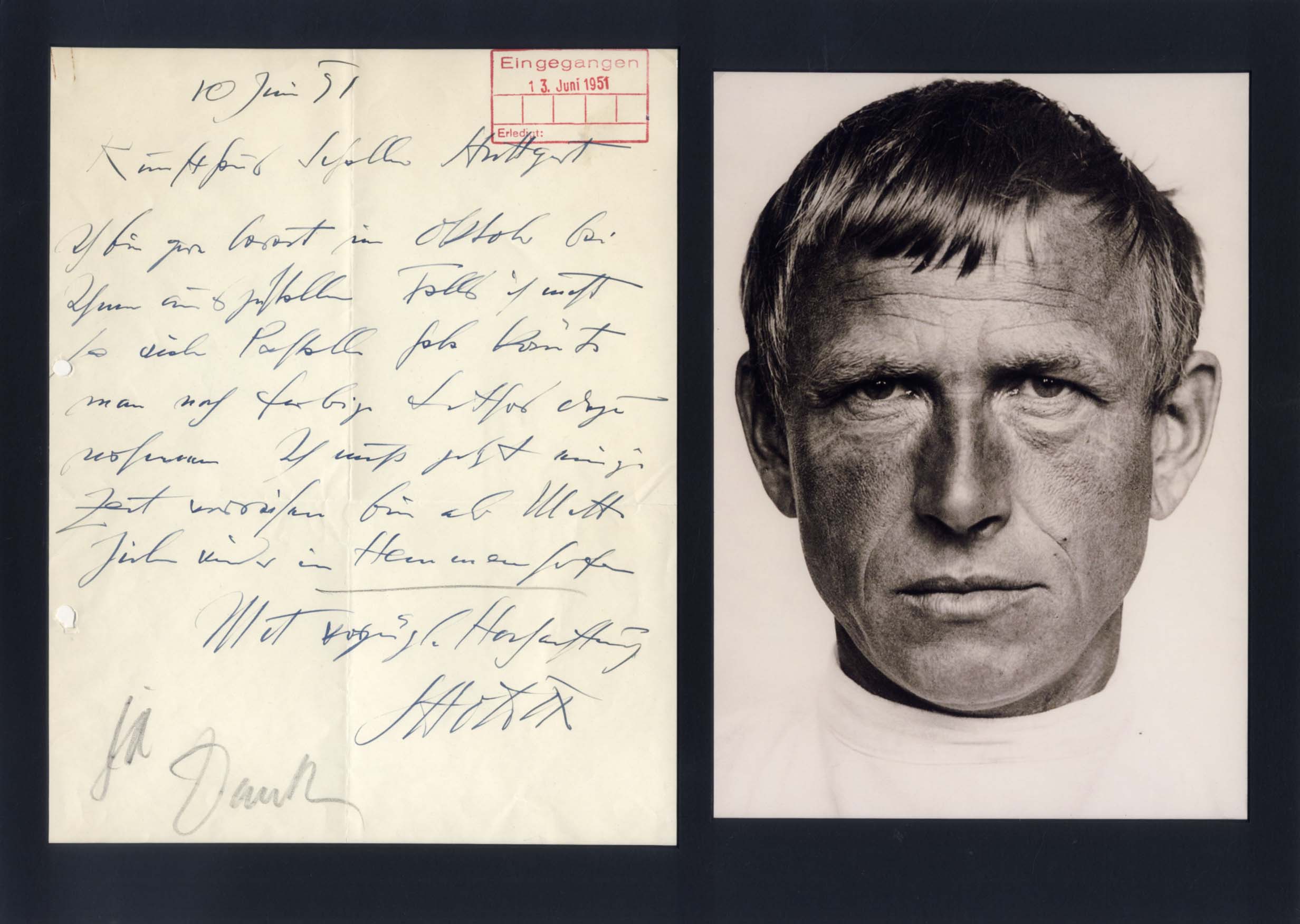
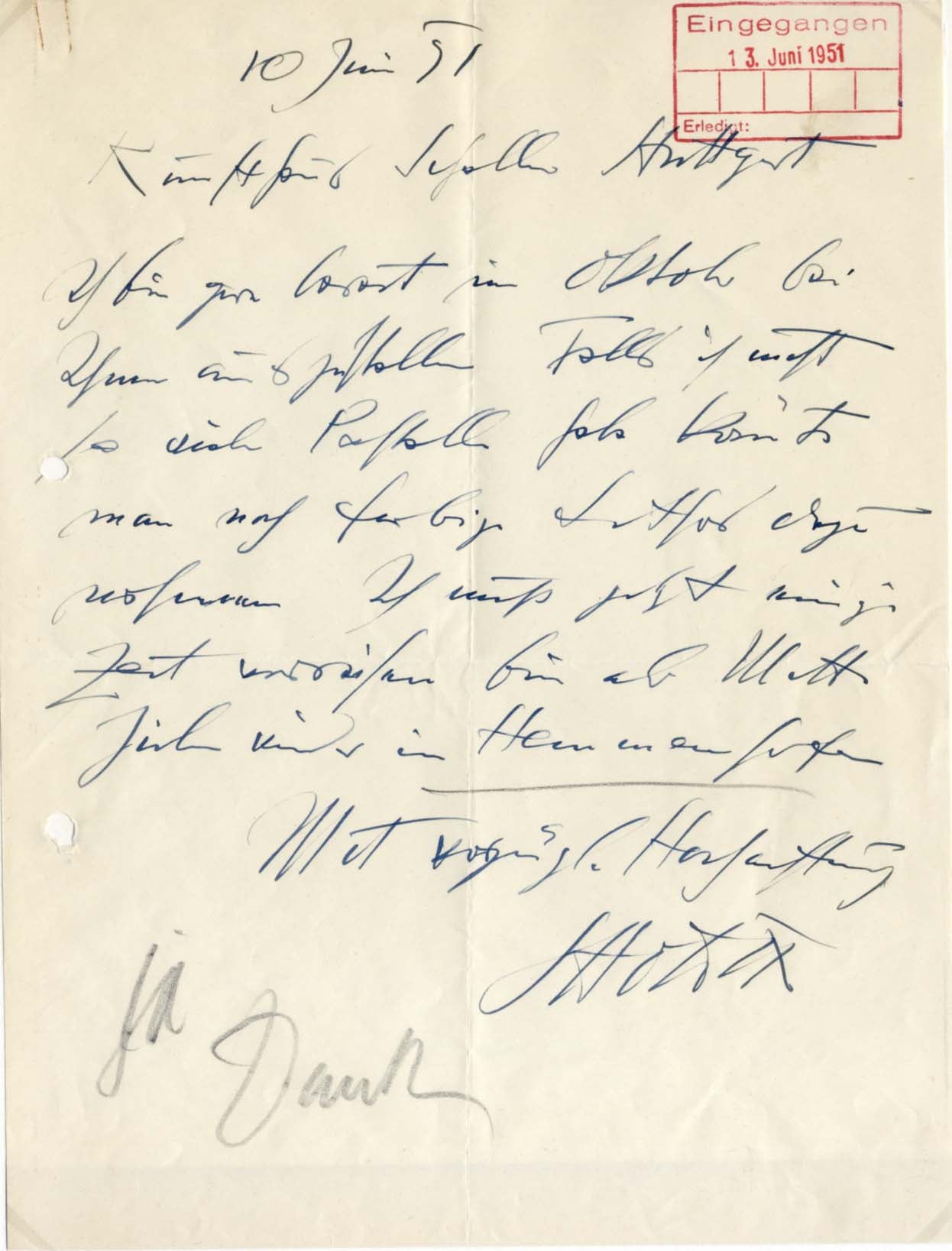
Autograph letter signed, one page - with receipt stamp (13.06.1951), 8,25 x 10,25 inch, 10.06.1951, (Radolfzell), in German, to the gallery Schaller in Stuttgart - concerning the exhibition of pastels and colored lithograph, written and signed in blue ink "Otto Dix", attractively mounted (removable) for fine display with a photograph, shows Dix in a close-up portrait (altogether 16,5 x 11,75 inch), with mild letter folds, and puncher holes to the left edge - in fine condition.
"10 Juni 51
Kunsthaus Schaller Stuttgart
Ich bin gern bereit im Oktober bei Ihnen auszustellen. Falls ich nicht so viele Pastelle habe könnte man noch farbige Lithos dazunehmen. Ich muß jetzt einige Zeit verreisen bin ab Mitte Juli wieder in Hemmenhofen.
Mit vorzügl. Hochachtung - Otto Dix"
Translated:
"June 10, 1951
Kunsthaus Schaller Stuttgart
I would be happy to exhibit with you in October. If I don't have enough pastels, we could also include some colored lithographs. I have to travel for a while now and will be back in Hemmenhofen in mid-July.
Sincerely, - Otto Dix"
Plus d'informations sur la personne
Profession:
(1891-1969) German painter and printmaker
Year of Birth: 1891
Otto Dix was a German painter and printmaker known for his brutally honest and realistic depictions of war and the aftermath. Born in Untermhaus, Germany in 1891, Dix began his artistic career by studying at the Dresden School of Arts and Crafts.
During World War I, Dix served as a machine gunner on the Western Front, an experience that deeply affected his artistic style. His works from this period often depicted the horrors of war, with graphic and haunting imagery.
After the war, Dix became a prominent figure in the German art scene, joining the New Objectivity movement and gaining international recognition for his powerful and provocative works. He was known for his use of vivid colors and precise lines, as well as his unflinching portrayal of the human condition.
As the Nazi regime rose to power in Germany, Dix's work came under scrutiny for its critical view of society and politics. He was labeled a "degenerate" artist by the Nazis and his works were removed from museums and galleries.
Despite the persecution he faced, Dix continued to create art throughout his life, exploring themes of war, politics, and the human experience. He passed away in 1969, leaving behind a legacy of powerful and thought-provoking works.
Today, Otto Dix is remembered as one of the most important German artists of the 20th century, celebrated for his courage, honesty, and talent in capturing the harsh realities of life through his art.
Certificat d'authenticité
Toutes nos pièces sont vendues avec un certificat d'authenticité. Si une pièce se révèle être erronée ou si vous n'aimez pas un autographe, vous récupérerez votre argent toute une vie.
Paiement et sécurité
Vos informations de paiement sont gérées de manière sécurisée. Nous ne stockons ni ne pouvons récupérer votre numéro de carte bancaire.