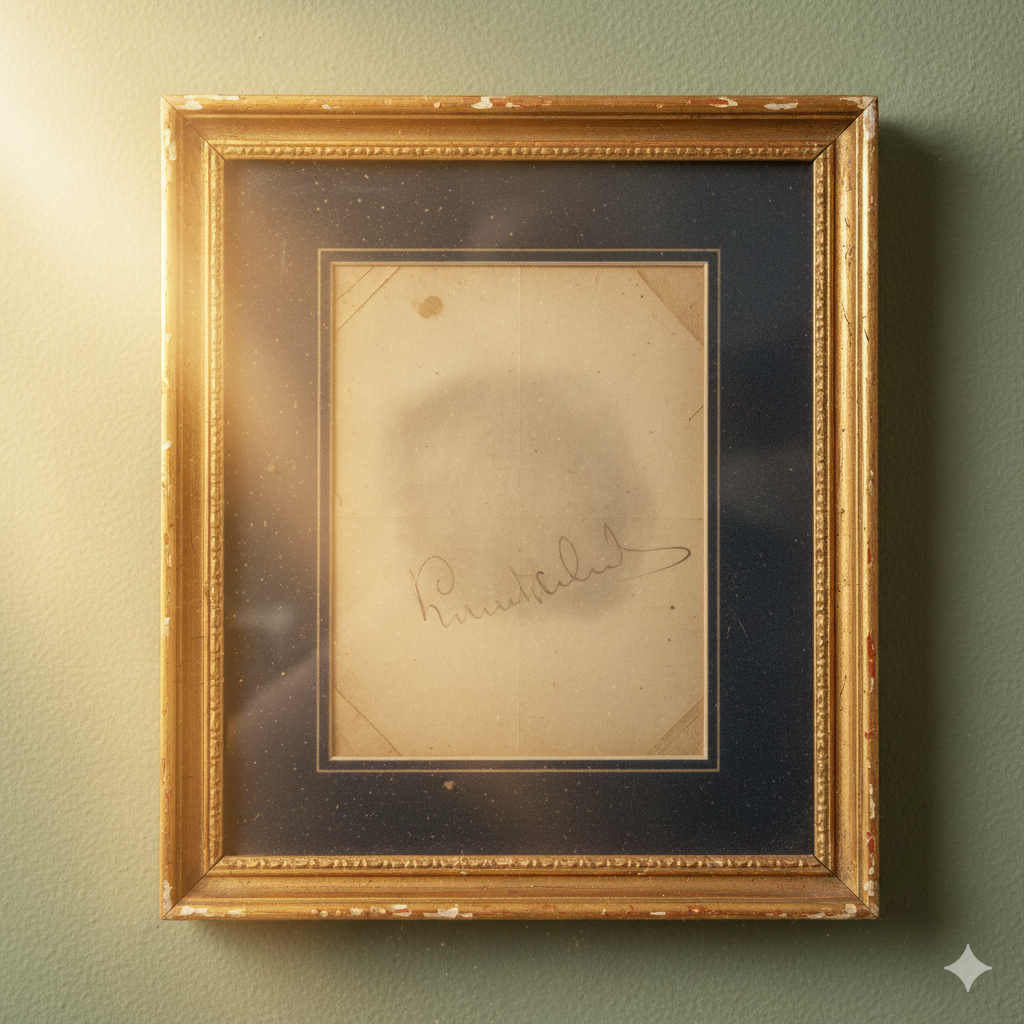
There is nothing more heartbreaking for a collector than realizing a treasured autograph has faded into a ghostly whisper of its former self. We recently received a query from a client who, having just acquired a beautiful letter by Victor Hugo, wanted to know how to display it safely in his living room . His question touches upon the single greatest threat to any paper collectible: damage from improper display .
It’s a vital concern because the damage caused by fading is irreversible. A signature bleached by light cannot be restored. The value, both historical and financial, is permanently diminished. The good news is that with the right knowledge and materials, you can protect your investment for generations to come.
The Invisible Threat: UV Light and Acid
The primary culprit behind fading ink and yellowing paper is Ultraviolet (UV) light. It’s an insidious threat because it’s present in all daylight, not just direct, harsh sunlight. Standard picture frame glass does virtually nothing to stop it. The second enemy comes from within the frame itself: acid. Low-quality framing materials contain acids that "bleed" into the autograph over time, causing brown spots and making the paper brittle.
The Solution: Conservation Framing
To properly protect your autograph, you must insist on conservation framing from a qualified professional framer. This isn't a brand name but a set of standards. Here’s what you need to specify:
-
The Glass: Your Primary Shield
This is the most critical decision. You must use Museum Glass or equivalent conservation-grade glazing. This type of glass offers two non-negotiable benefits:- 99% UV Protection: It acts as a powerful shield, blocking nearly all harmful UV rays that cause fading.
-
Anti-Reflection: It is optically coated to be almost invisible, offering a crystal-clear view of your piece without distracting glare or reflections.
Do not accept standard "non-glare" or "anti-reflex" glass, as these are typically just etched glass and offer no significant UV protection.
-
The Environment Inside the Frame
Everything that touches your autograph must be of archival quality.- Passe-partout (Matboard): The mat creates a vital air gap between the glass and the autograph, preventing moisture condensation and potential mold growth. It must be 100% acid-free and lignin-free (also called museum-grade or archival-quality). This is a standard we take incredibly seriously. That's why the custom passe-partouts you receive with our autographs are meticulously prepared by a professional paper conservator, ensuring they meet the highest archival standards and provide elite protection from the start.
- Mounting & Backing: The autograph should never be permanently attached with tape or glue. A professional will use reversible, acid-free methods like paper hinges or archival mounting corners. The backing board behind the entire assembly must also be acid-free.
Investing in a piece of history is the first step; preserving it is the second. By specifying these materials, you ensure that your treasured autograph whether it's a letter from a literary giant or a signature from a modern star remains as crisp and vibrant as the day it was signed