

Beschreibung
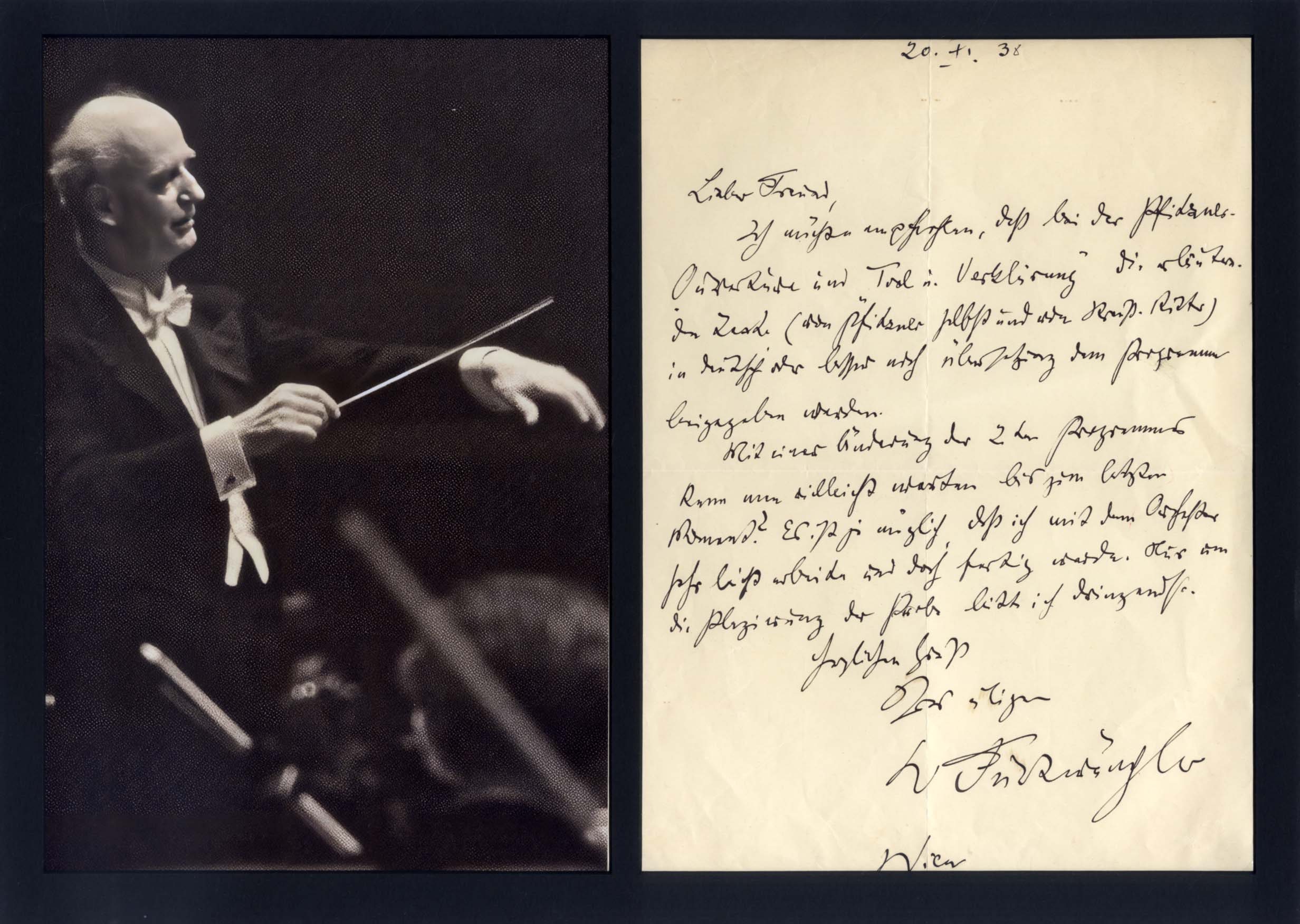
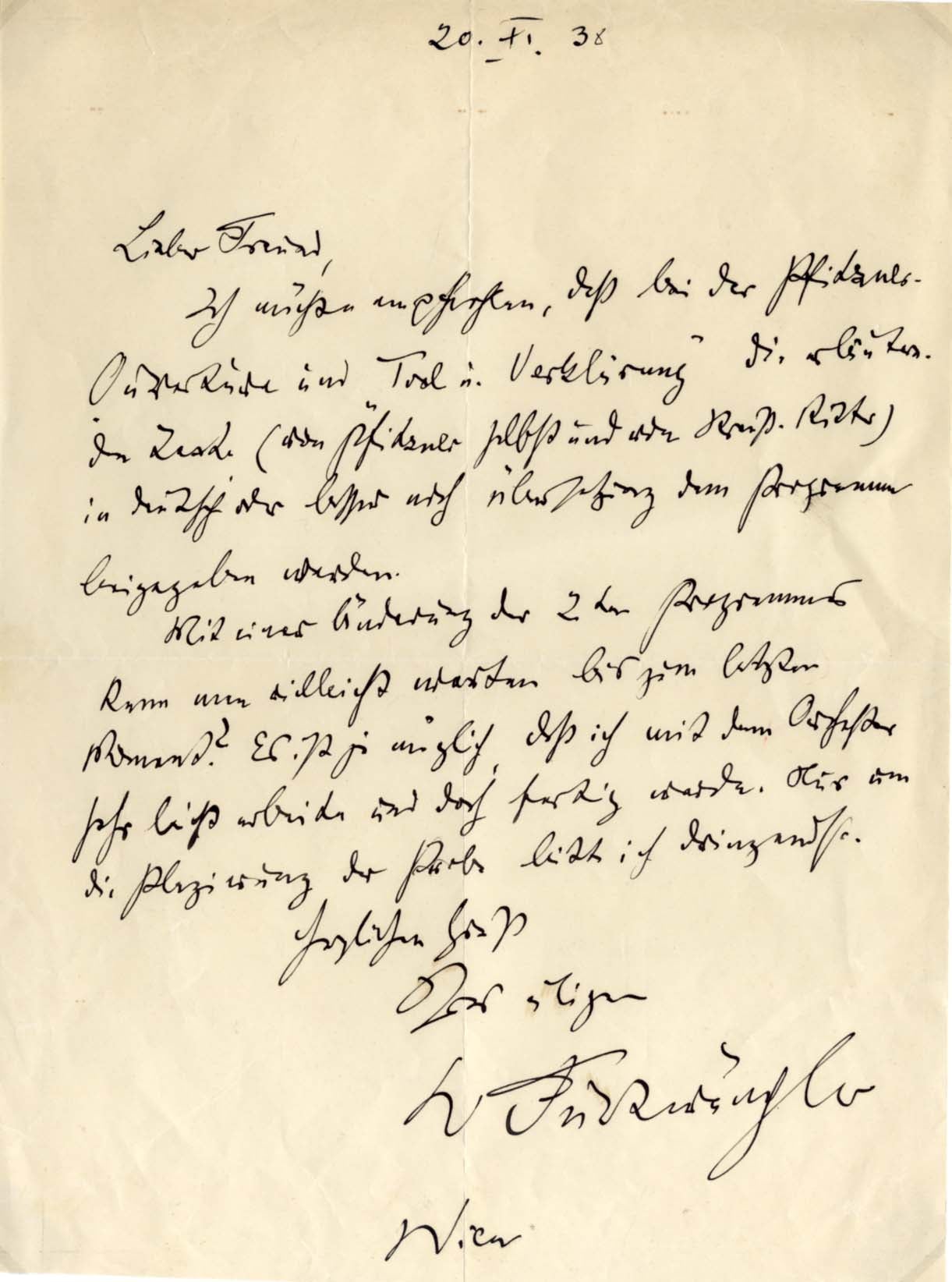
Eigenhändiger Brief mit Unterschrift, eine Seite, 8 x 11 inch, Wien, 20.11.1938, an Charles Munch (franz. Dirigent, 1891-1968) - die Planung für ein Konzertprogramm betreffend, in dunkler Tinte geschrieben und signiert "W Furtwängler", zur Ausstellung attraktiv montiert (herausnehmbar) mit einer Photographie von Wilhelm Furtwängler bei einem Auftritt (insgesamt 16,5 x 11,75 inch), mit leichten Gebrauchsspuren - in gutem bis sehr gutem Zustand.
"20. I. 38
Lieber Freund,
Ich möchte anfragen, ob die öffentlichen Aufführungen und Teile der Vorstellung ‚Die Eisheiligen‘ im Radio, oder auf späterer Schallplatte oder Rundfunkbericht, weiterhin in derselben Fassung in das Programm aufgenommen werden sollen.
Mit einer Änderung des zweiten Programmteils kann man vielleicht bis zur letzten Probe warten. Es ist möglich, dass ich mich beim Abschluss des Stückes wieder beeilen muss, und wenn die Ansetzung der Probe leicht ist, wäre das dringend.
Herzlichen Gruß
W. Furtwangler
Wien"
Weitere Infos zur Person
Profession:
(1886 - 1954) Deutscher Dirigent und Komponist - er gilt als einer der größten symphonischen und Operndirigenten des 20. Jahrhunderts
Year of Birth: 1886
Wilhelm Furtwängler was a renowned German conductor and composer, born on January 25, 1886, in Berlin. He is widely considered one of the greatest conductors of the 20th century, known for his profound interpretations of the works of composers such as Beethoven, Brahms, and Wagner.
From a young age, Furtwängler showed exceptional musical talent and began studying piano, composition, and conducting at an early age. He made his conducting debut at the age of 21 and quickly gained a reputation for his passionate and expressive performances.
During his career, Furtwängler held positions as the principal conductor of the Berlin Philharmonic Orchestra and the Vienna Philharmonic Orchestra. He also conducted the renowned Bayreuth Festival, where he became known for his interpretations of Wagner's operas.
Despite his immense talent and success, Furtwängler's career was marked by controversy. He was criticized for his decision to remain in Germany during the Nazi regime and for conducting concerts in support of the regime. After the war, he was temporarily banned from conducting but eventually cleared of any wrongdoing.
In the post-war years, Furtwängler continued to perform and record extensively, solidifying his reputation as one of the greatest conductors of his time. He passed away on November 30, 1954, leaving behind a rich legacy of recordings and performances that continue to inspire audiences today.
Wilhelm Furtwängler's unique and deeply emotional approach to music has left an indelible mark on the world of classical music, ensuring his place as a legendary figure in the history of music.
Echtheitszertifikat
Zahlung & Sicherheit
Deine Zahlungsinformationen werden sicher verarbeitet. Wir speichern keine Kreditkartendaten und haben auch keinen Zugang zu deinen Kreditkartendaten.