


Beschreibung
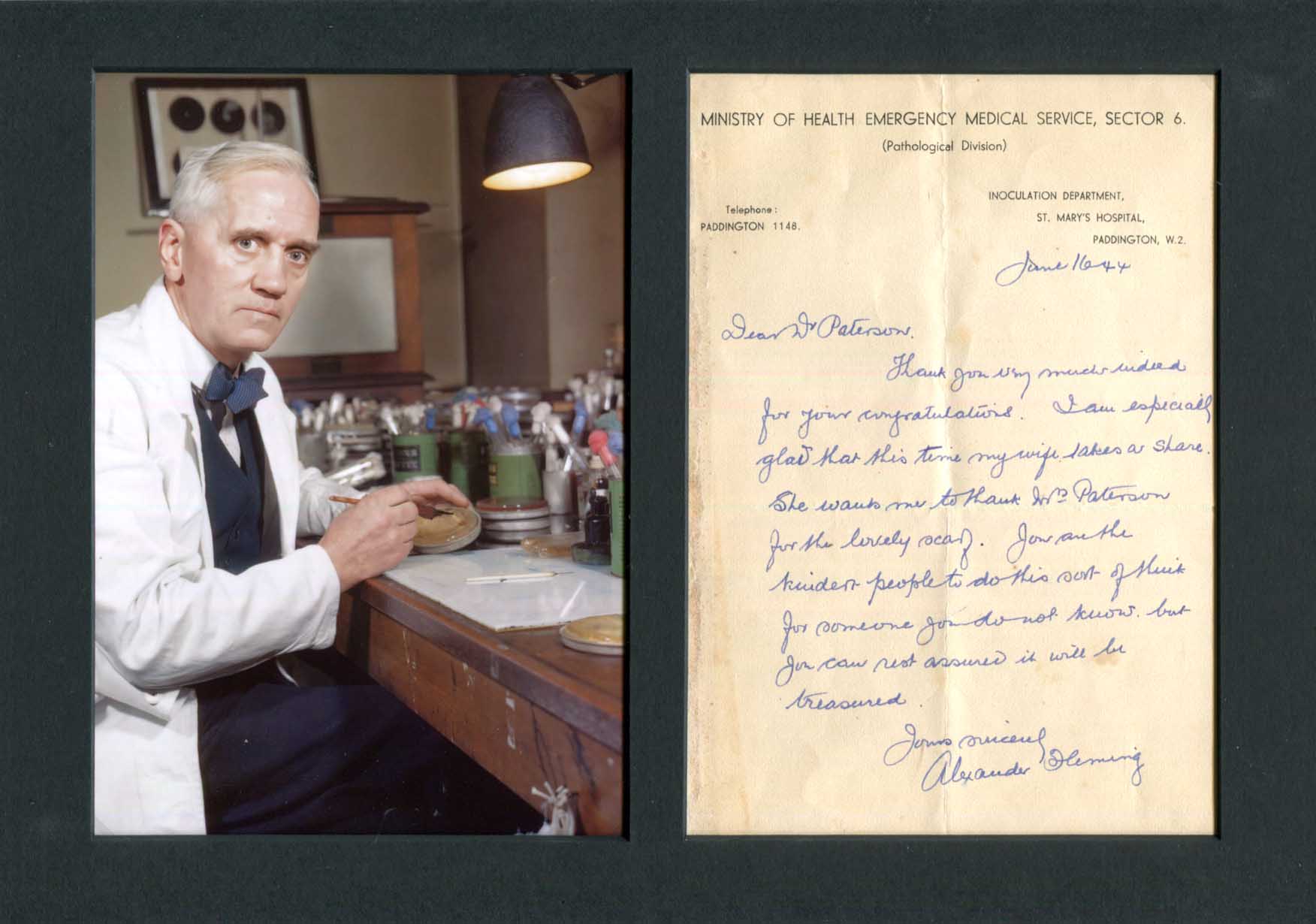
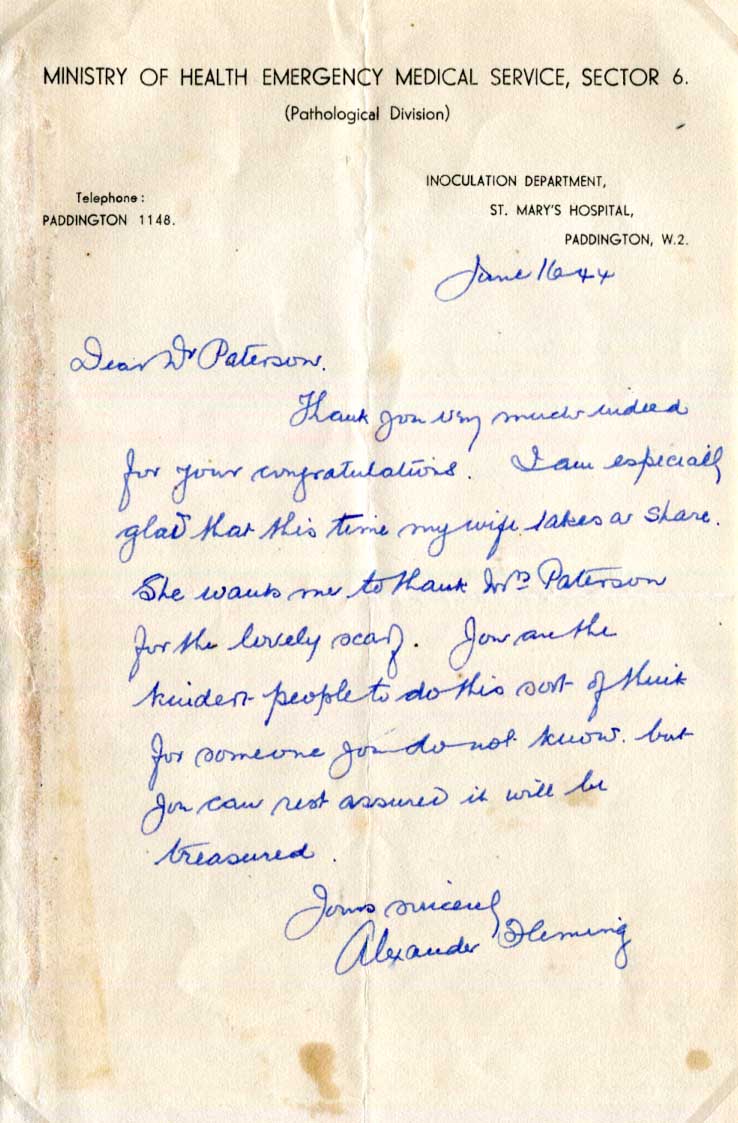
"Dear Dr. Paterson,
Thank you very much indeed for your congratulations. I am especially glad that this time my wife takes a share. She wants me to thank Mrs. Paterson for the lovely scarf. You are the kindest people to do this sort of thing for someone you do not know, but you can rest assured it will be treasured.
Yours sincerely, - Alexander Fleming"
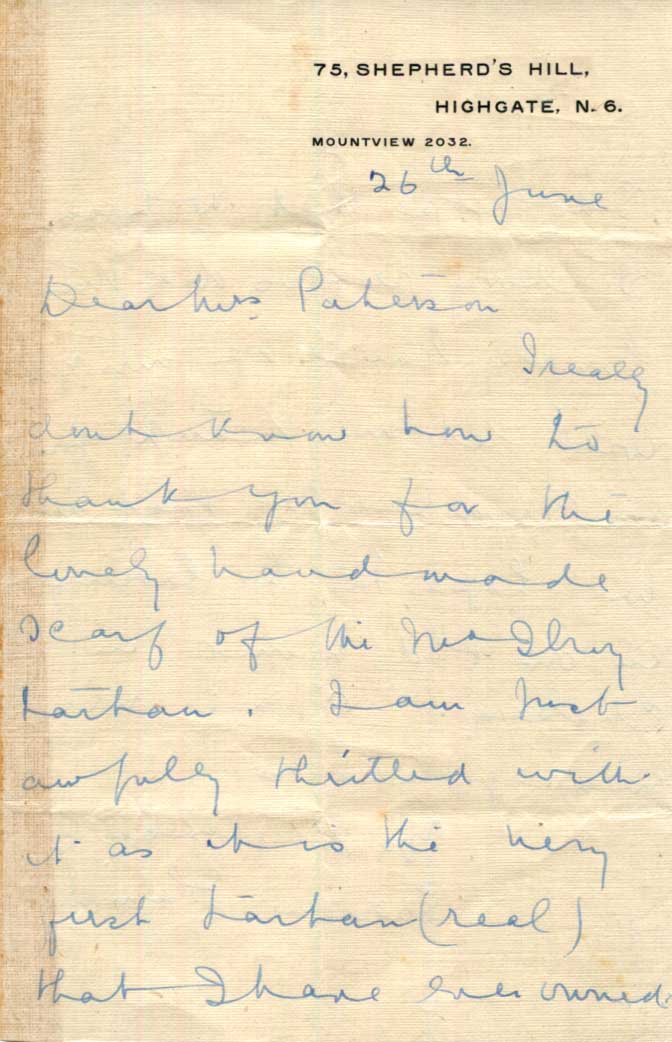
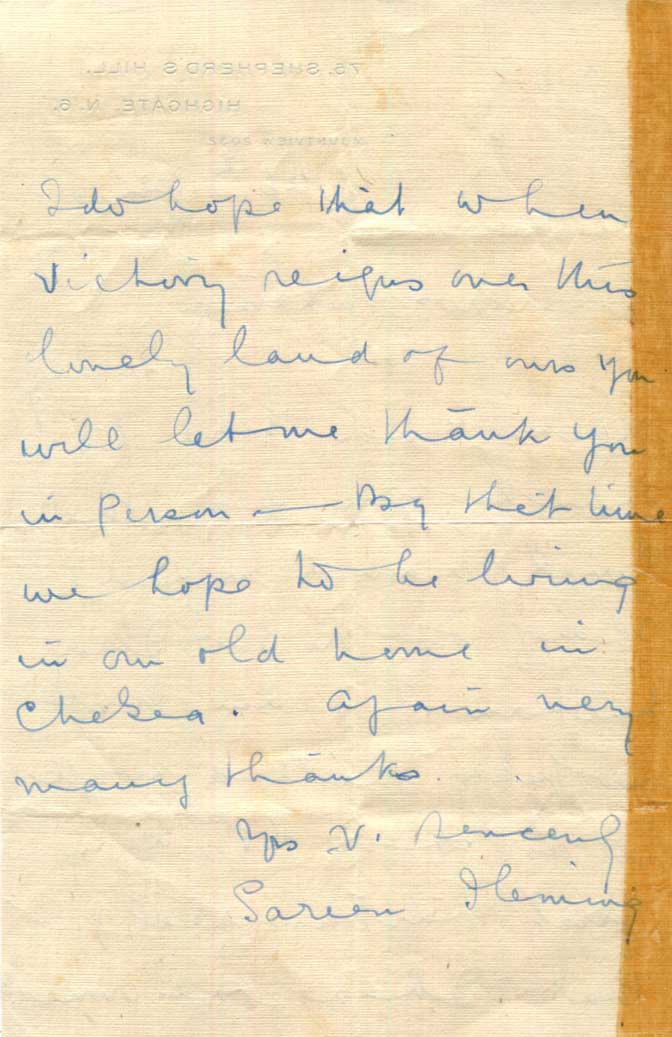
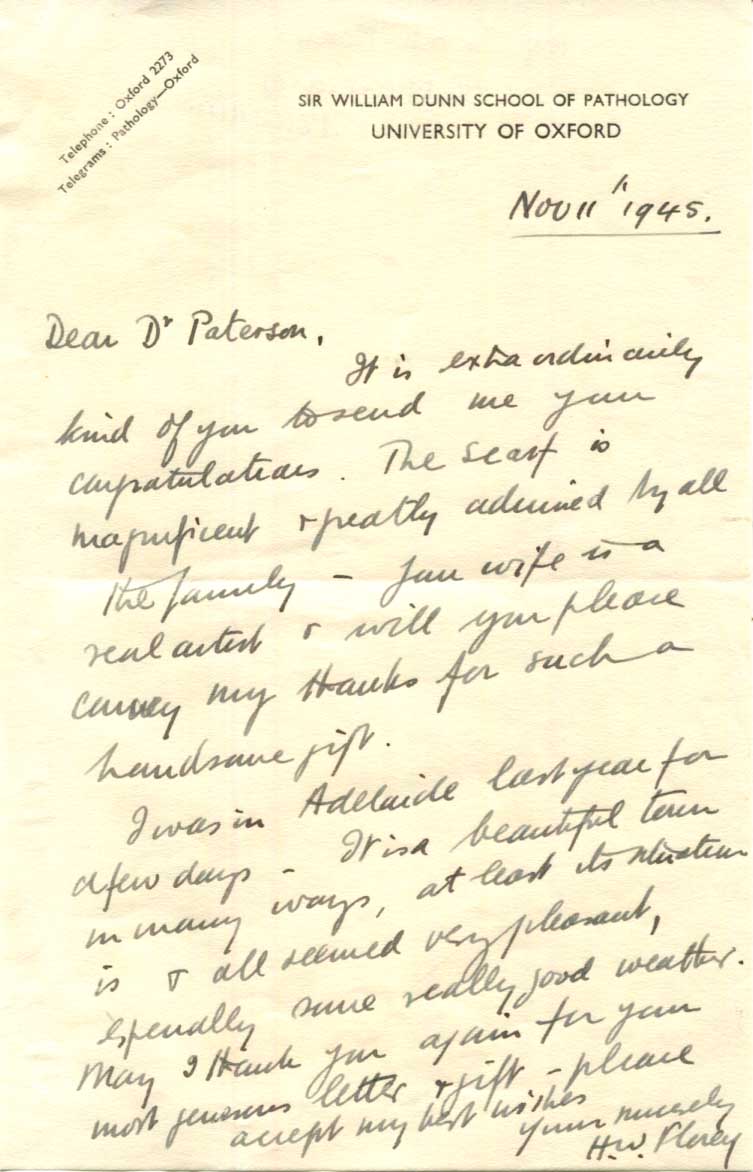
Beiliegend ein eigenhändiger Brief (zweiseitig) mit Unterschrift von Frau Fleming an Frau Paterson, in dem sie sich überschwänglich für den Schal bedankt und erklärt, dass sie sich gerne persönlich bedanken möchte, wenn "victory reigns over this lovely land of ours". Zudem ein eigenhändiger Brief (einseitig) mit Unterschrift von H. W. Florey, dem australischen Pathologen, dem es gelang, das Medikament Penecillin zu isolieren, das Fleming zufällig entdeckt hatte - ebenfalls an Dr. Paterson (11. November 1945) - und nochmals mit Dank an ihn für einen Schal und für seine Glückwünsche (möglicherweise zu seiner Verleihung des Nobelpreises für Medizin, den er in diesem Jahr zusammen mit Fleming und Ernst Chain gewann).
Weitere Infos zur Person
Profession:
(1881 - 1955) Biologe und Pharmakologe
Year of Birth: 1881
Alexander Fleming was a Scottish biologist and pharmacologist who is best known for his discovery of the antibiotic penicillin in 1928. Born on August 6, 1881 in Lochfield, Scotland, Fleming grew up on a farm and showed an early interest in science. He studied medicine at St. Mary's Hospital Medical School in London and later served as a captain in the Army Medical Corps during World War I.
After the war, Fleming returned to his research at St. Mary's and began studying the properties of bacteria. In 1928, he made the discovery that would change the course of modern medicine: the antibiotic penicillin. Fleming observed that a mold called Penicillium notatum had antibacterial properties that could kill a wide range of disease-causing bacteria.
Fleming's discovery of penicillin revolutionized the treatment of bacterial infections and earned him the Nobel Prize in Physiology or Medicine in 1945. He continued to work in the field of microbiology and made several other significant contributions to medicine throughout his career.
In addition to his work on penicillin, Fleming also conducted research on other antibiotics and vaccines. He died on March 11, 1955 in London, leaving behind a lasting legacy as one of the pioneers of modern medicine.
Today, Alexander Fleming is remembered as a groundbreaking scientist whose discovery of penicillin has saved countless lives and transformed the field of medicine. His work continues to inspire researchers and medical professionals around the world.
In recognition of his contributions to science, Fleming's work is commemorated in numerous ways, including statues, awards, and institutions named in his honor. His legacy lives on as a testament to the power of scientific discovery and the impact it can have on society.
Echtheitszertifikat
Zahlung & Sicherheit
Deine Zahlungsinformationen werden sicher verarbeitet. Wir speichern keine Kreditkartendaten und haben auch keinen Zugang zu deinen Kreditkartendaten.